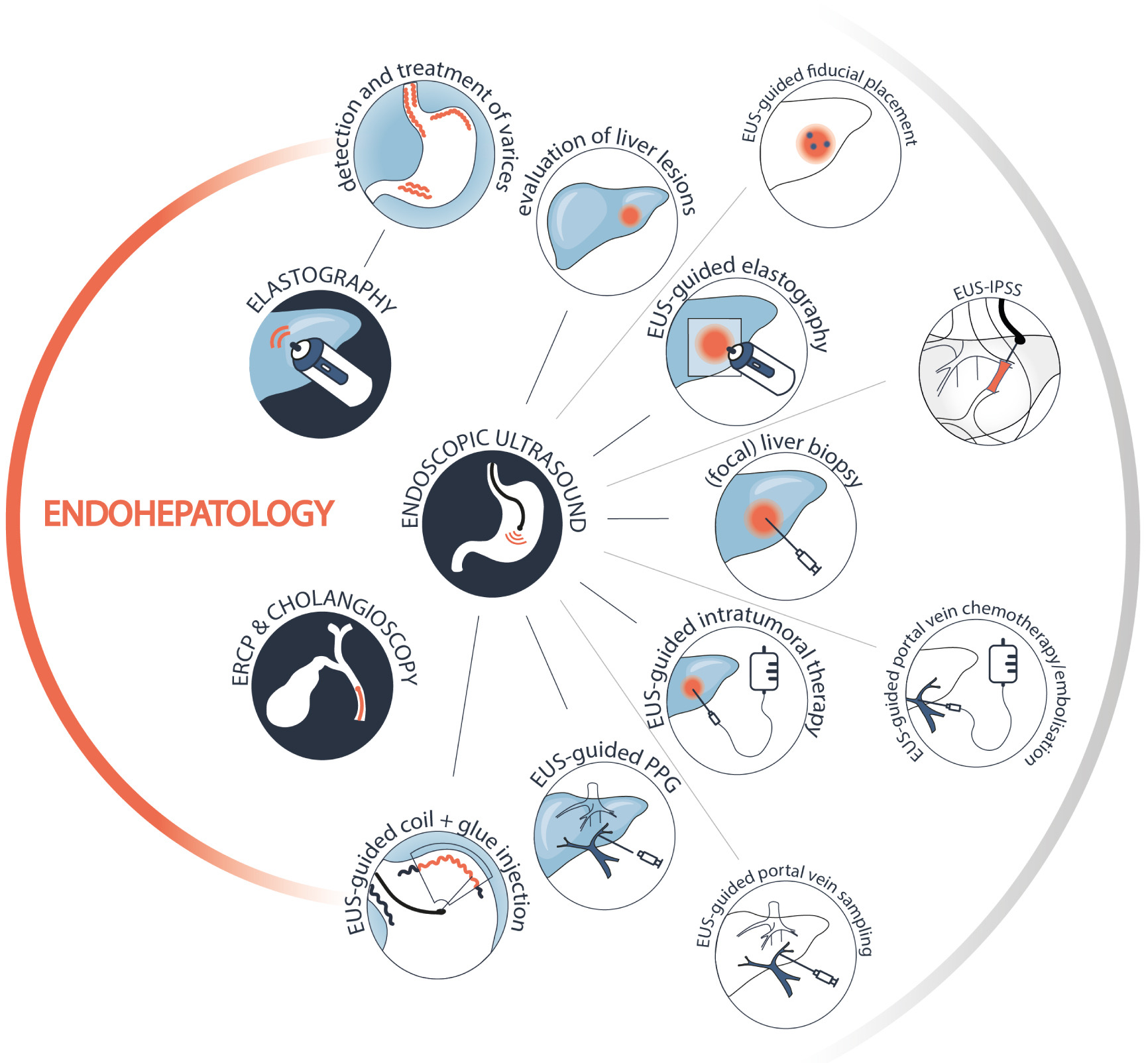
One of the most exciting developments in advanced endoscopy is the emerging field of endohepatology — using endoscopic ultrasound (EUS) and other advanced endoscopic techniques to investigate and manage liver disease in less invasive ways.
During my time undertaking advanced endoscopy training in Boston, I had the opportunity to work alongside leading experts in interventional endoscopy and hepatology. As part of this collaboration, I contributed to research examining the use of endohepatology techniques in children, recently published in Gastrointestinal Endoscopy as “The Emerging Field of Endohepatology in the Pediatric Population – A Single Center Experience from the United States.”
Traditionally, assessing complex liver disease can require several separate investigations. Endohepatology aims to bring some of these together during a single endoscopic procedure. Depending on the clinical situation, EUS can be used to obtain high-quality liver biopsy samples, directly assess pressures within the portal circulation, and assist with the management of complications of portal hypertension.
Our research described the early experience of applying this rapidly evolving field to paediatric patients at a specialist US centre. While larger studies are required before these techniques become routine in children, the work demonstrates how the boundaries of therapeutic endoscopy continue to expand.
For me, this project was particularly rewarding because it combined two important areas of my practice: advanced EUS and the management of complex liver and portal hypertensive disease.
These techniques represent an exciting direction for gastroenterology — allowing us to obtain more information, with less invasive testing, and potentially combine several investigations into a single procedure.