
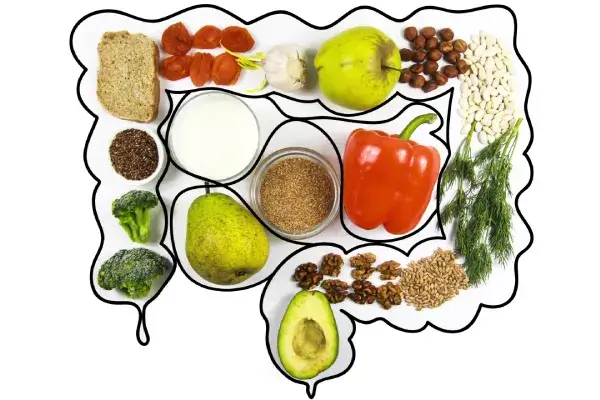
Fibre often doesn’t get the attention it deserves, but it’s one of the simplest and most effective ways to improve your gut health and overall wellbeing.

Why Fibre Matters
- Keeps you regular: Fibre adds bulk and softness to stool, preventing constipation.
- Feeds good bacteria: Fibre acts as fuel for healthy gut microbes, supporting a balanced microbiome.
- Protects against disease: A high-fibre diet is linked to lower rates of bowel cancer, heart disease, and type 2 diabetes.
Most Australian adults should aim for 25–30 grams per day — but most of us only get half that.

Types of Fibre
Soluble fibre
- Dissolves in water to form a gel in the gut.
- Helps soften stools (useful for constipation) and can also slow down diarrhoea.
- May lower cholesterol and help control blood sugar levels.
- Food sources: oats, barley, legumes (beans, lentils, chickpeas), apples, pears, berries, and psyllium husk.
Insoluble fibre
- Does not dissolve in water and passes through the bowel mostly intact.
- Adds bulk to stool and helps food move through the digestive tract.
- Helps prevent constipation and keeps the bowel healthy.
- Food sources: wholegrain breads and cereals, wheat bran, nuts, seeds, and many vegetables (especially skins and rinds).
Resistant starch (prebiotic fibre)
- A special form of carbohydrate that resists digestion in the small intestine and reaches the large bowel.
- Acts as food for good bacteria in the gut, producing substances that support bowel health.
- Food sources: cooked and cooled potatoes or rice, green bananas, legumes, and some wholegrains.

Fibre Supplements in Australia
While food should always be the first source of fibre, some people find supplements useful if diet alone isn’t enough. Common options available in Australia include:
Psyllium husk (e.g. Metamucil, generic psyllium)
- A natural source of both soluble and insoluble fibre.
- Helpful for constipation, diarrhoea, and overall bowel regularity.
- Available as powders (flavoured or unflavoured), capsules, and sometimes gummies.
Wheat dextrin (e.g. Benefiber)
- A soluble fibre that dissolves completely in water, with little taste or texture.
- Easy to add to drinks or food without noticing.
- Available as powders and chewable tablets.
Plain psyllium husk (health food and supermarket brands)
- Often sold as a powder or flakes.
- A budget-friendly option for those comfortable mixing it into food or water.

Tips for Using Fibre Supplements
- Start slow: Introduce fibre gradually to avoid bloating and excess wind.
- Stay hydrated: Always take fibre with a full glass of water and drink plenty of fluids during the day.
- Form matters: Powders are versatile, capsules are convenient, and chewables or gummies may suit those who dislike mixing powders.
- Not a replacement: Supplements can help, but whole foods provide extra vitamins, minerals, and antioxidants that powders and capsules don’t.
- Check suitability: People with certain gut conditions (such as inflammatory bowel disease during a flare, recent bowel surgery, or strictures) should speak to their doctor before starting supplements.

Takeaway: A balanced mix of soluble fibre, insoluble fibre, and resistant starch supports healthy digestion, regularity, and long-term gut health. For most people, building fibre into everyday meals is enough, but supplements can be a safe and effective option if you need an extra boost.